Quick Summary
- Indoor cats need enrichment designed in, it does not happen automatically the way it does outdoors
- Height matters: vertical space gives cats a sense of safety and territory, not just something to climb
- Play should follow the hunt sequence, stalk, chase, catch, “kill” and eat, ending mid-hunt is what makes cats frustrated
- Laser pointers alone frustrate cats because there is nothing to physically catch at the end
- Scratching, foraging and window access are not luxuries, they are core feline behaviours that need an outlet
Outdoor cats build their own enrichment simply by existing in the world: new smells, things to climb, prey to stalk. Indoor cats do not get any of that for free. Every bit of stimulation has to be designed into the home, or boredom sets in and shows up as overeating, over-grooming, scratching the sofa, or picking fights with a housemate cat. This guide covers how to build a genuinely enriching indoor environment, from vertical space to play technique to spotting the difference between a bored cat and a stressed or unwell one.
Why Indoor Cats Need Designed Enrichment
Cats are obligate carnivores with a strong hunting instinct that does not switch off just because dinner arrives in a bowl. Keeping a cat indoors is often the right welfare choice, particularly near busy roads, but it removes the natural outlets an outdoor cat would use throughout the day. Cats Protection’s guide to keeping cats indoors is a good starting point on the welfare trade-offs and what a cat needs to thrive indoors.
International Cat Care frames this well through the idea of environmental needs: a cat’s home should let it express normal feline behaviour, not just provide food, water and a litter tray. Their guide to a cat’s environmental needs sets out five pillars, including safe space, resources spread apart, play and predatory behaviour, positive human contact, and respecting a cat’s sense of smell. Regular, gentle handling supports that positive human contact pillar too, and our guide to grooming a cat at home covers building up a calm grooming routine your cat actually tolerates.
Vertical Territory: Why Height Matters to Cats
Cats are both predator and prey in the wild, and height is how they manage that. Up high, a cat can watch the room, feel safe from anything approaching at floor level, and choose to disengage without leaving the space entirely.
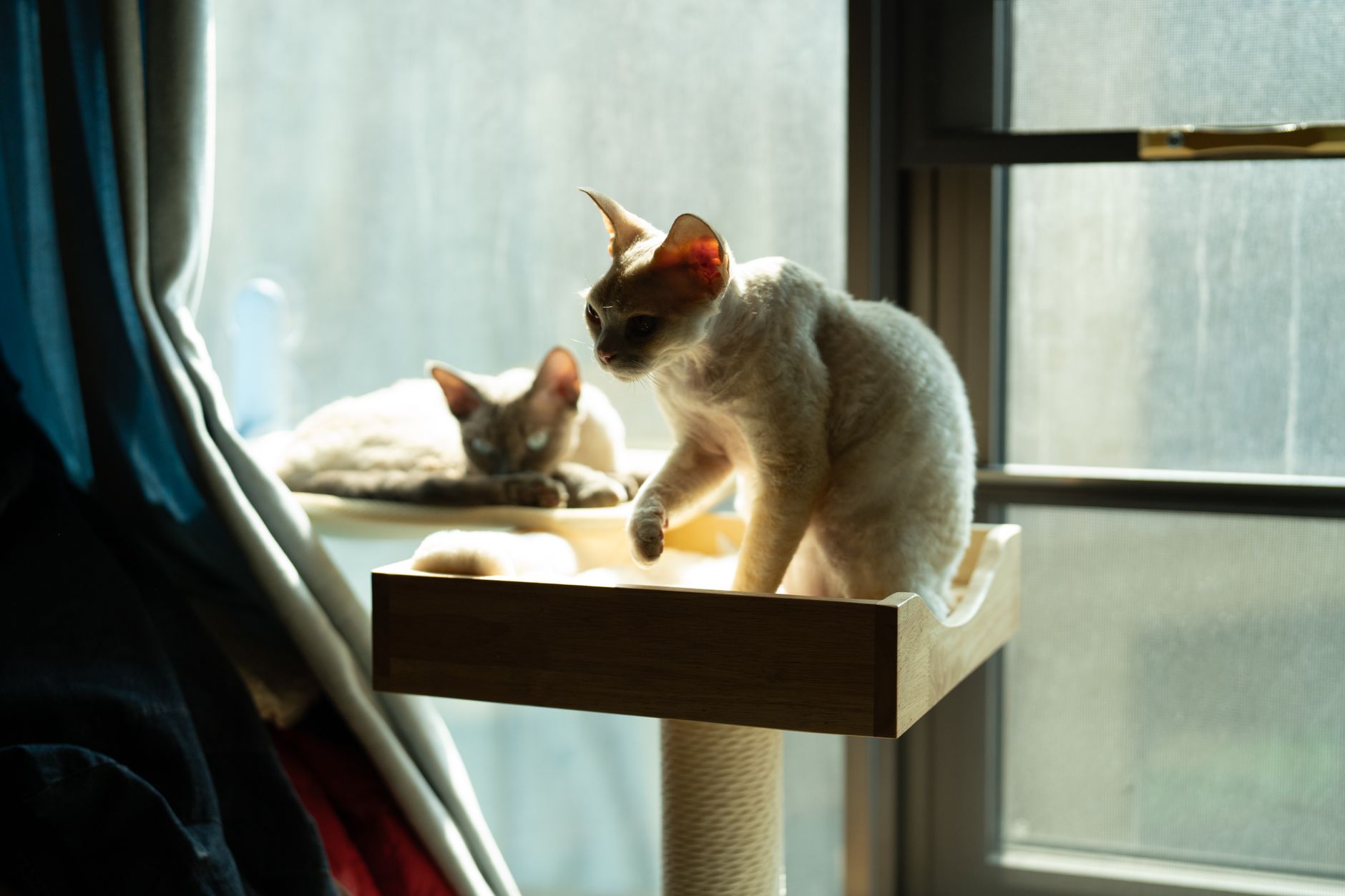
- A tall cat tree near a window, ideally with more than one level
- Wall-mounted shelves or steps, useful in smaller flats where floor space for a tree is limited
- Clear access to the top of a wardrobe or bookcase, cats will find height themselves if you let them
- At least one high resting spot per cat in a multi-cat home, so nobody has to compete for the best view
In a home with a nervous or lower-ranking cat, vertical space is especially important. It gives that cat somewhere to retreat that a more confident housemate is less likely to claim.
The Hunt Sequence: Play That Actually Satisfies a Cat
A cat’s natural hunting behaviour runs through a fixed sequence: stalk, chase, pounce, catch, “kill” bite, then eat or carry off the prey. Play that stops before the catch, or never lets a cat physically grip anything, leaves that sequence unfinished. This is why laser pointers used on their own are a common source of frustration. A cat can chase the dot endlessly but can never catch it, and over time that can build frustration rather than satisfaction.
If you use a laser, always finish the session by switching to a toy your cat can physically catch and “kill”, such as a small stuffed mouse, so the sequence completes properly.
Wand toy technique
- Move the toy like prey, not like a human waving a stick: pause, dart, hide behind furniture, do not wave it directly at your cat’s face
- Let your cat stalk and creep up rather than presenting the toy right in front of them
- Allow a genuine catch every few minutes, then let your cat hold and “kill” the toy before starting again
- End the session with a small feed or treat, this mimics the natural eat stage and helps your cat wind down rather than staying wound up
- Aim for two short sessions a day, five to ten minutes each, rather than one long session
iCatCare’s guide to play and play aggression in cats covers this in more depth, including how redirecting play onto toys rather than hands prevents play aggression developing.
Food Puzzles and Foraging
In the wild, a cat works for every meal, catching small amounts of prey many times a day rather than eating from a full bowl twice a day. Food puzzles bring some of that back.
- Scatter feeding: spread a portion of dry food across the floor or a mat instead of a bowl
- Puzzle feeders: ball or maze-style feeders that release kibble as they are batted around
- DIY foraging: cut holes in an empty box or egg carton and hide small amounts of food inside
- Split meals across the home: hide two or three small portions in different rooms so your cat has to search rather than eat everything from one spot
Introduce puzzle feeding gradually alongside a normal bowl at first, so your cat does not simply go hungry while learning. If your household includes a dog as well, our guide to dog enrichment and boredom covers food puzzle ideas for dogs, and portioning meals correctly matters for cats too, which our cat feeding portion guide covers in detail.
Scratching Posts: Placement, Material and Height
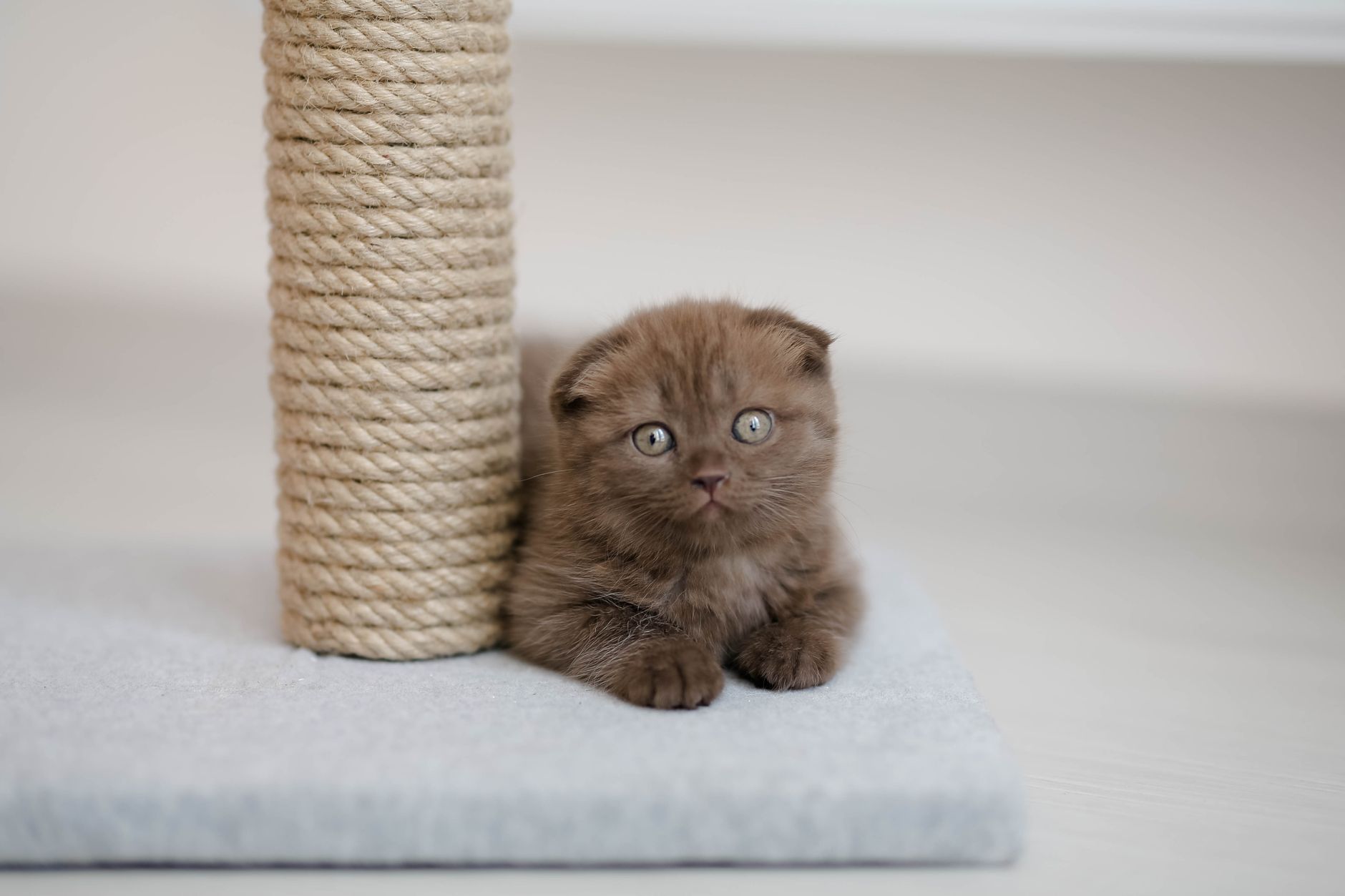
Scratching is not destructive behaviour, it is a normal way cats mark territory, stretch and keep their claws healthy. Without an appropriate post, a cat will scratch whatever is available, which is usually the sofa.
| Factor | What to look for |
|---|---|
| Height | Tall enough for a full stretch, most cats need at least 70 to 90cm |
| Stability | A wobbly post gets abandoned quickly, choose a heavy or wall-fixed base |
| Material | Sisal rope or sisal fabric tends to be preferred over carpet, which can feel too similar to household flooring |
| Orientation | Offer both a vertical post and a horizontal scratcher, different cats prefer different angles |
| Placement | Near resting areas and entry points to the room, not tucked away in an unused corner |
If your cat is scratching furniture despite having a post, try moving the post closer to the item being targeted before gradually shifting it to where you would prefer it.
Window Perches and Safe Outdoor Access
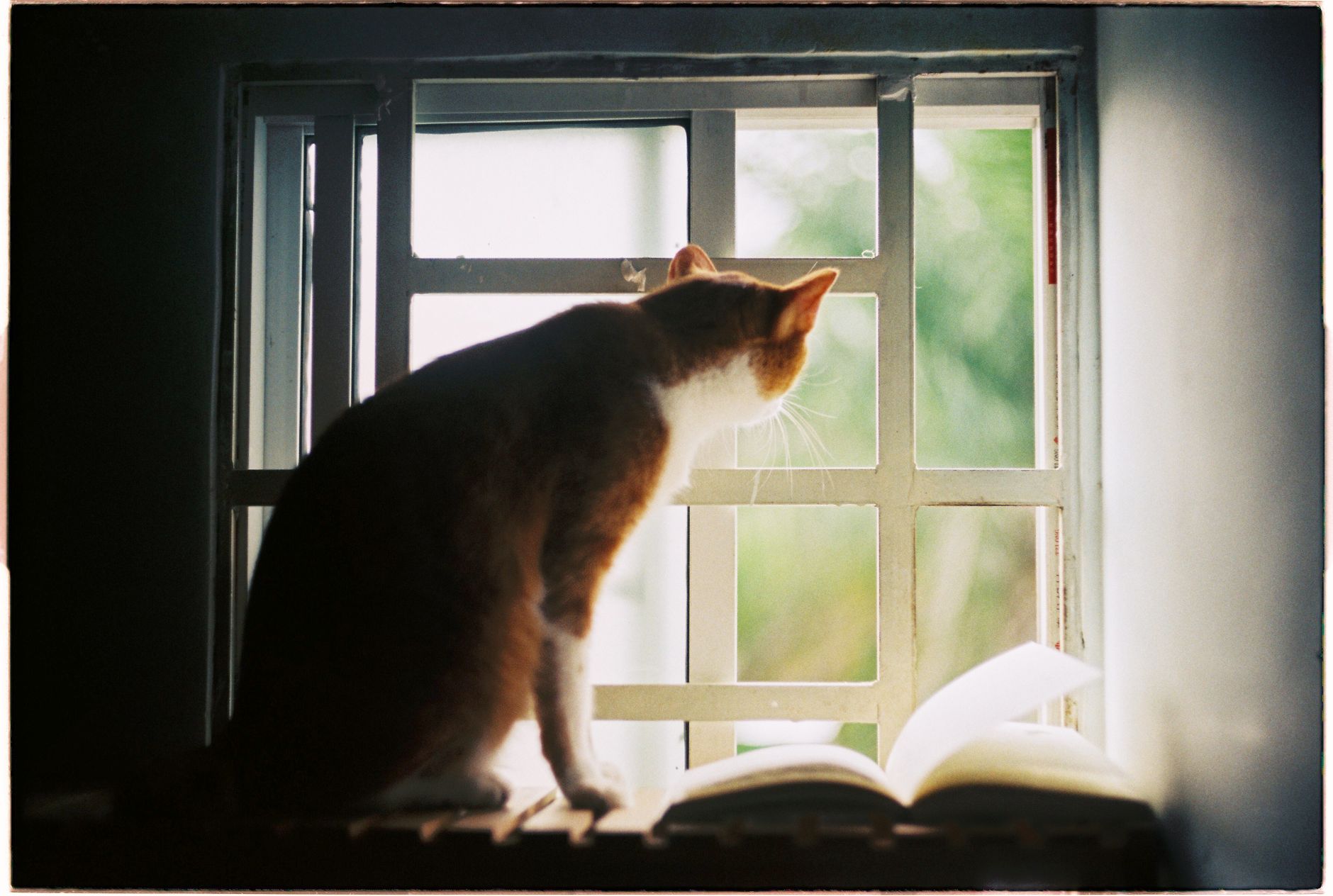
Watching the outside world, sometimes called “cat television”, is genuine enrichment in its own right. A secure window perch with a view of birds, passers-by or a garden gives an indoor cat sensory stimulation without any of the outdoor risks.
- A padded window perch or a piece of furniture positioned at a window sill
- A secure, enclosed catio or outdoor run if your garden allows for one
- Supervised, harness-and-lead access to a garden for cats that tolerate it, introduced gradually and never forced
- Bird feeders positioned outside a window (not accessible to the cat) to add movement and sound to watch
Not every cat wants or tolerates a harness, and that is entirely normal. A secure window view and a well-designed indoor space are enough enrichment for most cats.
Scent and Rotation
Cats rely heavily on scent to feel secure, which is why a strange smell can unsettle a normally confident cat. Enrichment through scent and rotation works alongside their sense of smell rather than against it.
- Rotate toys weekly rather than leaving the same ones out permanently, this restores novelty without new spending
- Introduce cat-safe herbs occasionally, such as catnip, silvervine or valerian, not every cat responds to all three
- Avoid heavily scented cleaning products on scratching posts, bedding or toys, this can put a cat off using them
- Let a new toy or piece of furniture sit in the home for a day before expecting a cat to use it confidently
Boredom, Stress or a Medical Problem: How to Tell Them Apart
Under-stimulated, stressed and unwell cats can show overlapping signs, so it is worth knowing the general patterns before assuming it is “just boredom”.
| Sign | Boredom | Stress | Possible medical cause |
|---|---|---|---|
| Over-grooming | Occasional, resolves with more play and enrichment | Localised, often on the belly or legs, linked to a specific stressor | Skin condition, allergy or pain, needs a vet check |
| Litter tray habits | Unaffected | Avoiding the tray, spraying, often tied to a change in the home | Straining, blood in urine or frequent visits need urgent vet attention |
| Appetite | Normal or slightly increased from boredom eating | Can drop off during a stressful period | Any sudden appetite change warrants a vet check |
| Activity | Restless, seeks attention, play-seeking | Hiding, reduced interaction, watchfulness | Lethargy alongside other symptoms needs veterinary assessment |
If you notice litter tray changes, appetite changes, or any sign your cat might be in pain, book a vet appointment rather than assuming it is behavioural. Enrichment supports a healthy cat’s wellbeing, it is not a treatment for illness.
Multi-Cat Households: Resource Spacing
Cats are not naturally as socially flexible as dogs, and two cats sharing a home does not automatically mean they are sharing resources happily. Competition over resources is a common, often invisible, source of stress in multi-cat homes.
- One litter tray per cat, plus one extra, placed in separate locations rather than side by side
- Multiple feeding stations spaced well apart, rather than one shared bowl or two bowls next to each other
- Several water sources around the home, away from food and litter trays
- Enough high resting spots and hiding places that no single cat controls the best ones
iCatCare’s advice on keeping cats happy indoors covers resource spacing for multi-cat homes in more detail, and is worth reading if you have noticed subtle tension between housemate cats, such as one cat blocking access to a doorway or litter tray.
Frequently Asked Questions
How much playtime does an indoor cat need each day?
Most cats do well with two to three short play sessions a day, around five to ten minutes each, rather than one long session. Watch your cat’s engagement, a cat that walks away has had enough for now.
Are laser pointers bad for cats?
Used alone and repeatedly, laser pointers can be frustrating because a cat can never physically catch the light. Follow any laser session with a toy your cat can catch and hold, so the hunting sequence completes properly.
My cat ignores expensive toys but plays with cardboard boxes, why?
Novelty and texture often matter more than price. A box offers hiding, height and scratchable material all at once, all things a plain plastic toy does not. Rotating simple items often works better than buying more expensive toys.
Can enrichment stop a cat scratching furniture?
A well-placed, stable scratching post positioned near the targeted furniture usually redirects the behaviour, since scratching itself is normal and cannot be removed entirely. It is about giving the right outlet, not stopping the behaviour.
How do I know if my cat is bored rather than unwell?
Boredom tends to resolve once you increase play, foraging and vertical space over a week or two. If signs persist, or you notice litter tray changes, appetite changes or lethargy, book a vet check to rule out a medical cause first.