Quick Summary
- Cats groom themselves, but not perfectly, especially long-haired breeds, senior cats and anywhere they cannot reach
- Short-haired cats need a weekly brush, long-haired cats need daily brushing to prevent tangles becoming mats
- Never cut a mat out with scissors, cat skin tents up inside a mat and is very easy to nick
- A cat that suddenly stops grooming itself may be in pain or unwell, and should see a vet
- Short, calm sessions with rewards work far better than one long session that ends in a struggle
Cats have a reputation for keeping themselves immaculately clean, and most of the time that reputation is earned. A healthy cat spends a large part of its day licking, nibbling and paw-washing its way to a tidy coat. But self-grooming has limits. Long fur mats faster than a cat’s tongue can manage, older cats become less flexible and less thorough, and some cats simply cannot reach certain spots, particularly around the neck, tail base and hindquarters. That is where you come in.
This guide covers brushing by coat length, the tools worth having, how to deal with mats and shedding safely, and what to do if your cat is not keen on being handled. As always, anything that looks like pain, illness or a sudden change in behaviour is a job for your vet, not a home remedy.
Why Cats Still Need Help, Despite Self-Grooming
A cat’s tongue is covered in small, backward-facing hooks called papillae, which work brilliantly as a natural comb for short fur. They are far less effective on long, dense coats, where loose undercoat builds up faster than a cat can remove it. According to Cats Protection, cats usually need very little help with fur maintenance since they are naturally clean animals, but some find it difficult, which is when owner grooming becomes necessary.
Arthritis, obesity, dental pain and simple old age can all make grooming physically harder for a cat, and stress or underlying illness can also reduce how motivated a cat is to bother. In all of these cases, a helping hand with a brush keeps the coat comfortable and gives you a regular chance to check for anything unusual.
Short-Hair vs Long-Hair Routines
Short-Haired Cats
Breeds and moggies with short, close coats, think British Shorthairs, most domestic short-hairs and Siamese, generally need only a quick brush once a week. A soft bristle brush or a grooming glove is usually enough to lift loose hair and give the coat a shine. Short-haired cats rarely mat, though it is still worth checking under the chin and around the tail base where fur can get missed.
Long-Haired Cats
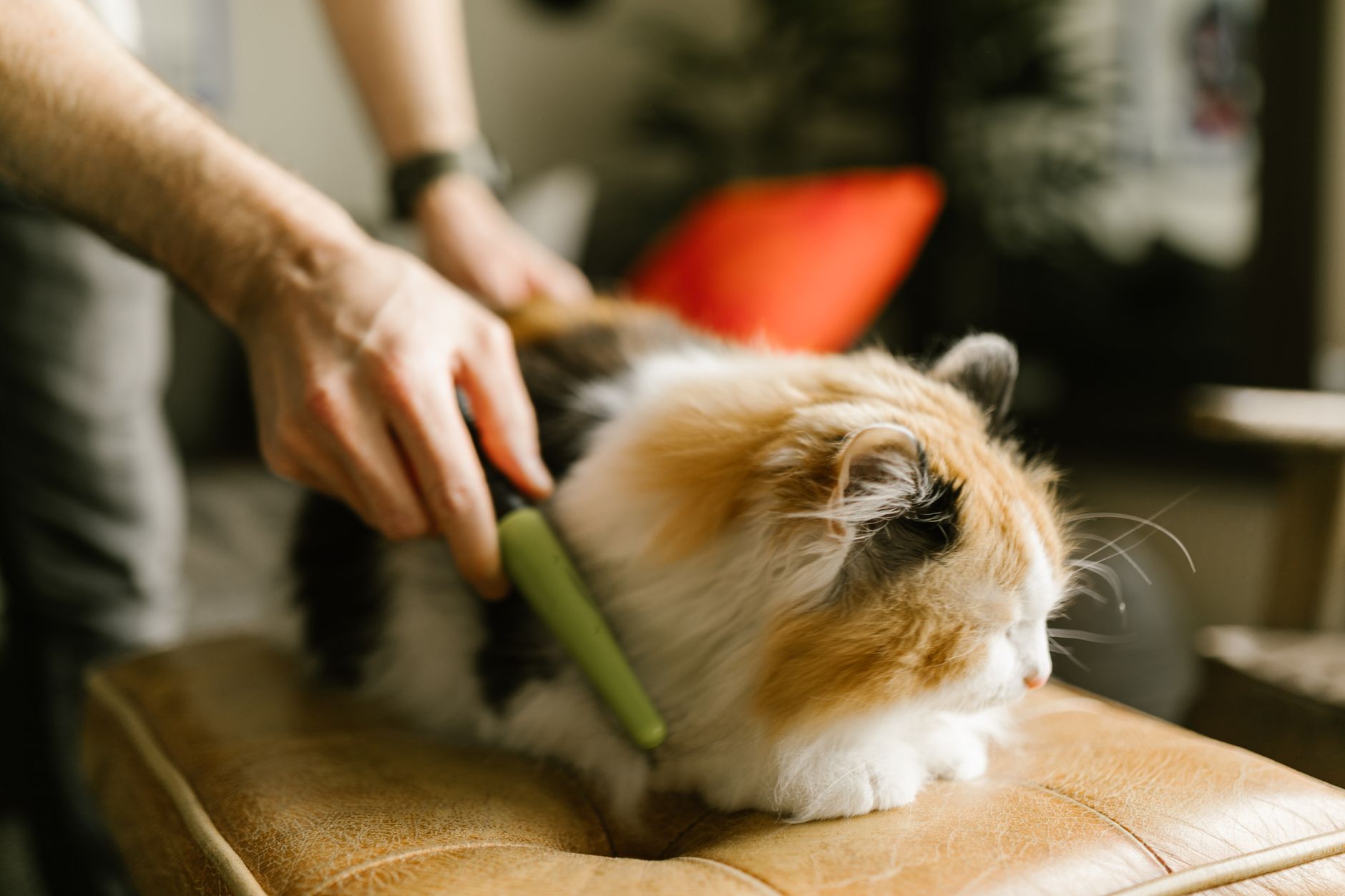
Persians, Maine Coons, Ragdolls and other long-haired breeds need daily brushing. Left even a few days, loose undercoat tangles into knots, and knots tighten into mats surprisingly quickly, particularly behind the ears, under the front legs, and around the tail base and back legs. According to a Cats Protection blog on grooming long-haired cats, daily brushing is the single most effective way to prevent matting in these breeds. Work through the coat in sections with a wide-tooth comb, starting from the belly and legs where mats form first, before finishing with an overall brush.
Choosing the Right Brush
| Tool | Best for |
|---|---|
| Rubber grooming glove | Short-haired cats, and cats who are nervous of tools that look like brushes |
| Soft bristle brush | Short coats, general shine and light shedding removal |
| Slicker brush | Medium to long coats, lifts loose undercoat and light tangles |
| Wide-tooth comb | Long coats, working through knots gently without pulling on the skin |
| Dematting comb | Loosening small, early-stage mats before they tighten further |
Introduce any new tool slowly. Let your cat sniff it, touch it to the coat briefly, and reward calm behaviour before attempting a full brushing pass.
Matting: Prevention and Why You Must Never Cut a Mat Out
A mat is loose fur that has tangled into a tight knot close to the skin. Regular brushing, daily for long-haired cats, weekly for short-haired cats, is by far the best prevention. If you do find a small, loose tangle, hold the base of the fur firmly between your fingers (this stops pulling on the skin itself) and gently work it apart with a wide-tooth comb or dematting comb, starting at the outer edge and working inward.
Never try to cut a mat out with scissors. Cat skin is extremely thin and mobile, and it tents upward into the mat as the fur tightens, which means the skin sits much closer to your blades than it appears. This is one of the most common causes of accidental cuts owners bring to vets. If a mat is tight, close to the skin or covers a larger area, ask your vet or a professional groomer to remove it safely with clippers.
Shedding and Hairballs
Cats shed year-round, with heavier sheds in spring and autumn as the coat adjusts to the season. Regular brushing removes a large amount of loose fur before your cat swallows it during self-grooming, which in turn reduces hairballs. If your cat is bringing up hairballs frequently, coughing persistently, or seems unwell, that is a conversation for your vet rather than something to manage with diet changes alone.
Nail Trimming
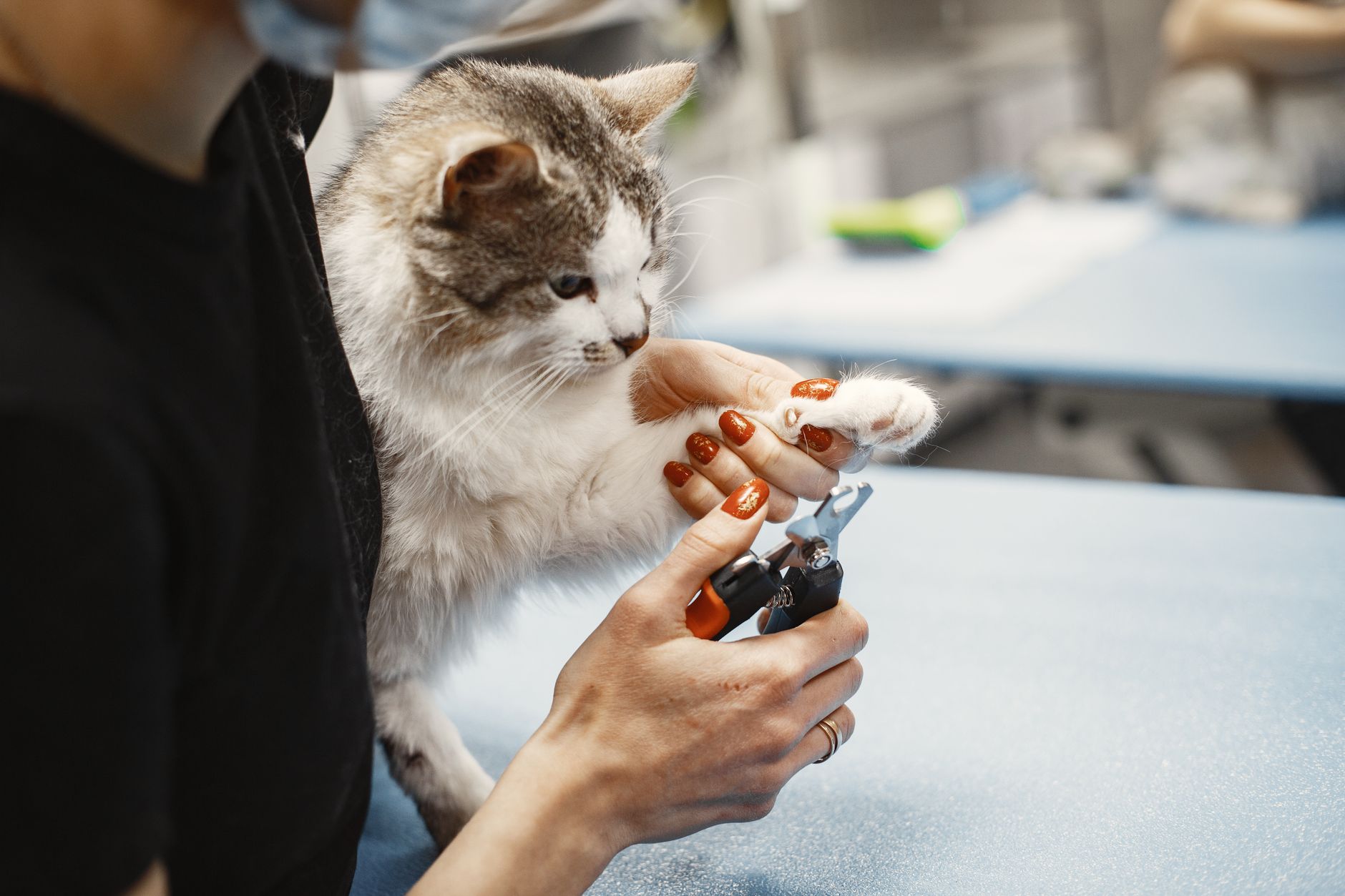
Indoor cats in particular often need their claws trimmed every few weeks, since they get less natural wear than cats with regular access to scratching posts, trees and rough outdoor surfaces. Hold a paw gently, press to extend the claw, and trim only the sharp white tip, well clear of the pink quick running through the centre of the claw. If your cat has dark claws and you cannot see the quick clearly, take off only a very thin sliver at a time.
Many cats tolerate one or two claws being trimmed per short session far better than all claws in one sitting. There is no shame in spreading nail trims across several days.
Handling a Cat That Hates Being Groomed
Plenty of cats are not natural fans of being brushed, and forcing the issue tends to make things worse. Watch your cat’s body language closely: a swishing tail, flattened ears or a low growl all mean it is time to stop, not push through. Keep initial sessions extremely short, under a minute is fine, and always end while your cat is still relaxed rather than waiting until they have had enough.
Choose a calm, quiet time, such as after a meal or during a normal resting period, rather than when your cat is already alert or playful. A soft grooming glove is often better tolerated than a brush for a nervous cat, since it feels more like petting.
Desensitisation in Short Sessions
If your cat is particularly reluctant, build tolerance gradually over days or weeks rather than expecting a single session to fix things. A simple approach:
- Day 1 to 3: Let your cat sniff and inspect the brush, reward with a treat, no brushing yet
- Day 4 to 6: Touch the brush to the coat for a few seconds in a spot your cat likes being stroked, then stop and reward
- Day 7 onward: Gradually extend brushing time and move into less favourite areas, always stopping on a good note
International Cat Care notes that grooming should be a positive experience built up gradually, particularly for cats that are not used to being handled regularly from a young age.
Senior Cats Who Stop Grooming Themselves
A noticeable drop in self-grooming in an older cat is one of the more reliable signs that something needs veterinary attention. Reduced flexibility from arthritis, dental pain that makes grooming uncomfortable, or an underlying illness can all cause a previously fastidious cat to let their coat go, particularly along the back and around the tail base where a stiff cat struggles to reach.
A greasy, matted or unkempt coat in a senior cat is not simply a grooming problem to brush through. It is worth booking a vet check to rule out pain or illness before assuming it is purely a coat issue. In the meantime, gentle, short brushing sessions can help keep them comfortable.
Frequently Asked Questions
How often should I brush my cat?
Short-haired cats generally need brushing about once a week. Long-haired cats need daily brushing to prevent loose fur tangling into mats. Senior cats of any coat length often need more help than they did when younger.
Do cats need baths?
Most cats never need a bath and manage their own hygiene perfectly well. A bath is occasionally needed if your cat has something sticky, toxic or otherwise unsafe in their fur, and it is worth calling your vet first, since bathing is stressful for most cats.
Is it safe to cut a mat out myself?
Small, loose tangles can often be worked apart with a comb. Tight mats close to the skin should be left to a vet or professional groomer with clippers, since cat skin tents upward inside a mat and scissors can cut it easily even when you are careful.
Why has my older cat stopped grooming itself?
This is a common sign of arthritis, dental pain, obesity or an underlying illness making grooming physically difficult or less appealing. A sudden drop in self-grooming in a senior cat is worth a vet check rather than assuming it is just laziness.
My cat hates the brush. What can I do?
Start with very short sessions, a minute or less, using a soft grooming glove rather than a brush if your cat is nervous. Build up gradually over days, always stopping while your cat is still relaxed, and reward calm behaviour with treats.
For the dog side of the household, our companion guide on grooming a dog at home covers brushing by coat type, bathing and nail care in detail. If your cat spends most of their time indoors, our guide to indoor cat enrichment has ideas for keeping them active between grooming sessions, and if you are working out the right amount to feed a cat that is less active in older age, see our cat portion guide.
Sources: Cats Protection, grooming your cat, Cats Protection, tips for grooming long-haired cats, International Cat Care, grooming your cat.