Quick Summary
- The feeding guide on a cat food packet is a starting point, not a fixed prescription for your individual cat.
- Calorie needs vary with weight, age, neuter status and activity, so two cats the same size can need different amounts.
- Body condition, how your cat actually looks and feels, is a better ongoing check than the number on the scales alone.
- Free-feeding (leaving food out all day) is one of the biggest drivers of feline obesity.
- Always speak to your vet before starting a weight loss plan. Crash dieting a cat can be dangerous.
“How much should I feed my cat?” sounds like it should have a simple answer. In practice it depends on your cat’s weight, age, neuter status, activity level and the specific food you are using, which is why the number on the back of the packet is only ever a starting point. This guide walks through how to read a feeding guide properly, why body condition matters more than the scales, and the feeding habits that most affect a cat’s weight over time.
Why packaging feeding guides are a starting point, not a prescription
Every UK cat food label carries a feeding guide, usually a table linking a cat’s weight to a daily amount. These figures are calculated for an average cat of that weight, and average is doing a lot of work in that sentence. Your cat’s actual energy needs depend on more than bodyweight alone, so the packet amount is a reasonable place to start and then adjust, not a number to follow blindly regardless of how your cat’s body condition changes.
If you are ever unsure how to interpret a feeding guide for your specific cat, or your cat has a health condition that affects diet, your vet can give guidance tailored to that individual animal in a way a packet never can.
What actually changes a cat’s calorie needs
- Weight. Larger cats need more energy to maintain their weight than smaller cats, which is why feeding guides scale by weight in the first place.
- Age. Kittens have high energy needs to support growth, adult cats need enough to maintain a stable weight, and senior cats often need less as activity naturally decreases, though some seniors need more if they are struggling to maintain weight.
- Neuter status. Neutered cats generally need fewer calories than unneutered cats of the same size, since neutering tends to lower metabolic rate and can increase appetite, a combination that makes weight gain more likely if feeding amounts are not adjusted.
- Activity level. An indoor cat with limited opportunity to exercise will typically need less food than an active outdoor cat covering a large territory. Keeping an indoor cat active with play and puzzle feeding, see our guide to indoor cat enrichment, can also help manage weight.
How to read a UK feeding chart properly
Feeding charts are usually laid out as a table of cat weight against daily amount, sometimes split by life stage. A few things are worth checking when you read one.
| Check | Why it matters |
|---|---|
| Is the amount daily or per meal? | Some charts state a daily total to be split across meals, others already show a per-meal amount. Misreading this can mean feeding double or half of what is intended. |
| Is it for dry, wet, or mixed feeding? | Dry and wet food have very different calorie density, so a dry feeding guide does not translate directly to a wet food amount, and vice versa. |
| Does it account for treats? | Treats and extras are usually not included in the base feeding guide, so they need to be accounted for separately. |
| What life stage is it calculated for? | Kitten, adult and senior formulas are calculated differently. Feeding a kitten amount to an adult cat, or vice versa, is a common mistake. |
Wet vs dry vs mixed feeding, and hydration
Dry and wet food are calorie-dense in different ways, largely because of their water content. Wet food is mostly water, dry food is not, which means a cat eating only dry food needs to be drinking enough water separately to stay properly hydrated.
Mixed feeding (a combination of wet and dry) is common in the UK and can work well, provided the total calories across both are accounted for rather than treating each as a separate, uncapped allowance. If you feed dry food, make sure fresh water is always available and easy to reach, since cats do not always compensate fully for low food-moisture with increased drinking.
Body condition scoring: the real measure
The number on the scales tells you a weight, but not whether that weight is healthy for that particular cat. Body condition scoring looks at how your cat actually feels and looks, which is a more useful ongoing check between vet visits.
- Ribs: you should be able to feel your cat’s ribs easily with light pressure, without them being visible.
- Waist: looking from above, there should be a visible waist behind the ribs, not a straight or bulging line.
- Belly: a slight tuck up from the chest to the abdomen when viewed from the side, rather than a hanging or rounded belly.
Organisations such as Cats Protection and International Cat Care publish body condition scoring charts that are worth looking at directly, since a visual guide is more useful than a written description alone. If you are not sure how to score your own cat, ask your vet or vet nurse to show you at your next check-up.
Meal frequency and grazing behaviour
Cats are natural grazers in the wild, eating small amounts frequently rather than one or two large meals. Some owners replicate this with several small measured meals a day, or a feeder that dispenses on a schedule, while others feed two larger meals. Either approach can work, provided the total daily amount stays within what that individual cat needs, rather than frequency being used as an excuse to feed more overall.
Why free-feeding drives feline obesity
Free-feeding, leaving a full bowl or hopper down all day for a cat to graze on at will, removes any real control over how much is actually eaten. Many cats will eat more than they need if food is constantly available, and it becomes very difficult to notice a gradual weight gain when there is no measured amount to compare against. Scheduled, measured meals, whether by hand or with a timed feeder, give you a much clearer picture of what your cat is actually eating and make it far easier to catch weight changes early.
An automatic timed feeder with a stainless steel bowl can help here, since it dispenses a set portion rather than leaving food available indefinitely. We cover the practical side of choosing one in our guide to choosing an automatic pet feeder, and you can browse the current feeder in our shop.
Safe weight loss pace, and why crash dieting a cat is dangerous
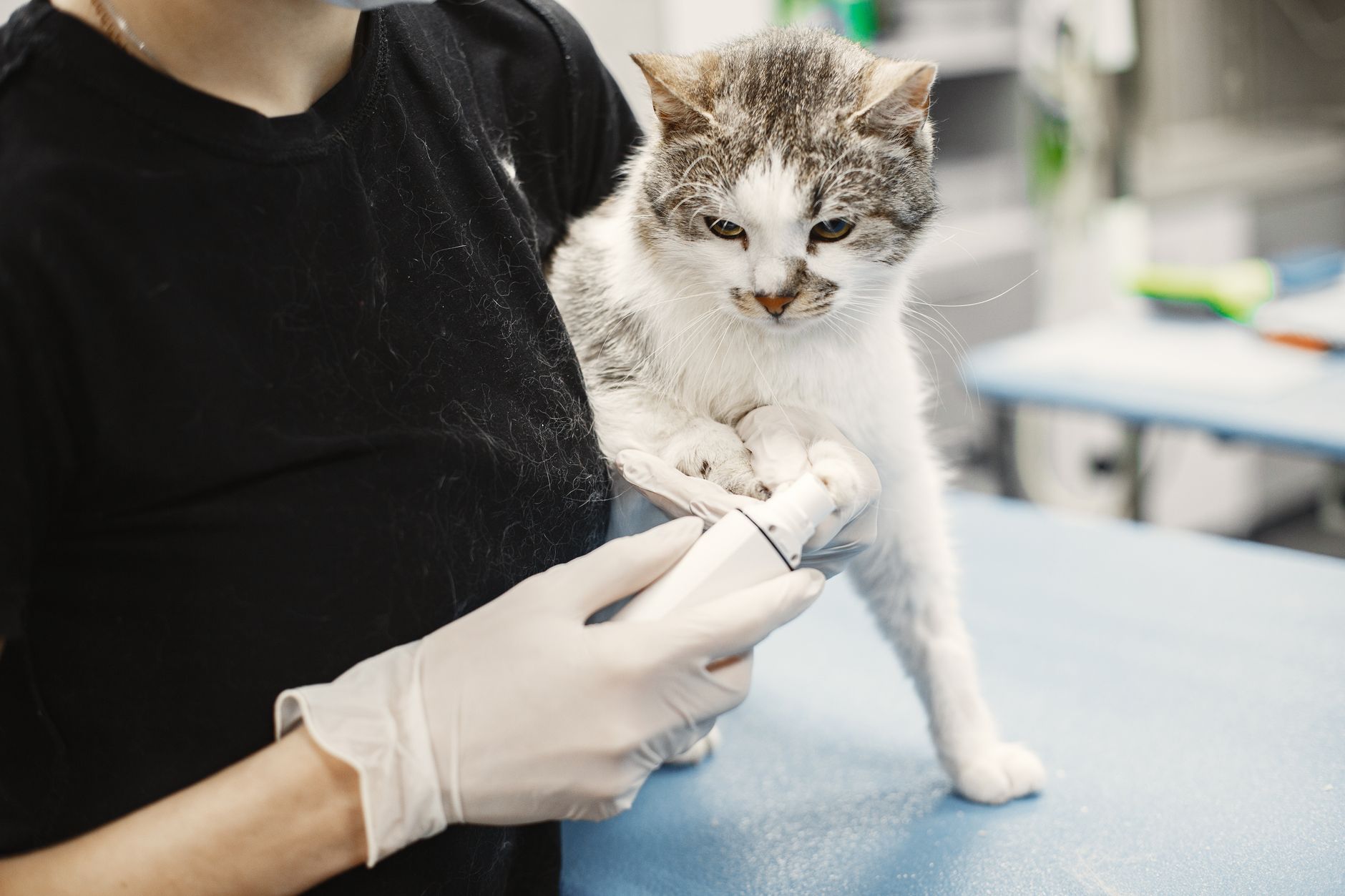
If your vet has confirmed your cat needs to lose weight, the pace matters as much as the target. Cats that lose weight too quickly, or that stop eating for even a short period during a poorly managed diet, are at risk of a serious liver condition called hepatic lipidosis, sometimes known as fatty liver disease. This is a genuine emergency, not a minor side effect, and it is one of the main reasons vets are firm about gradual, supervised weight loss rather than simply cutting food amounts sharply.
We are not going to give specific calorie or gram targets here, because a safe weight loss plan needs to be worked out for your individual cat by a vet, based on their current weight, target weight and health history. If your cat needs to lose weight, please make that appointment rather than guessing at a reduced amount yourself. The PDSA’s Animal Wellbeing Report has repeatedly highlighted pet obesity as a significant UK welfare issue, which is part of why getting this right matters.
Kittens vs adults vs seniors
Kitten food is formulated for growth and is more calorie-dense than adult food, so it is not something to feed a fully grown cat long term. Adult maintenance food is calculated for a stable, healthy weight in a mature cat. Senior formulas often account for the fact that many older cats are less active, though some seniors face the opposite problem and need support maintaining weight, particularly if an underlying health condition is affecting appetite. Any noticeable change in an older cat’s weight or appetite, in either direction, is worth a vet check rather than assuming it is simply ageing. Good all-round grooming and health checks also help you spot changes early, our guide to cat grooming at home covers the basics.
Multi-cat households: stopping one cat eating another’s food
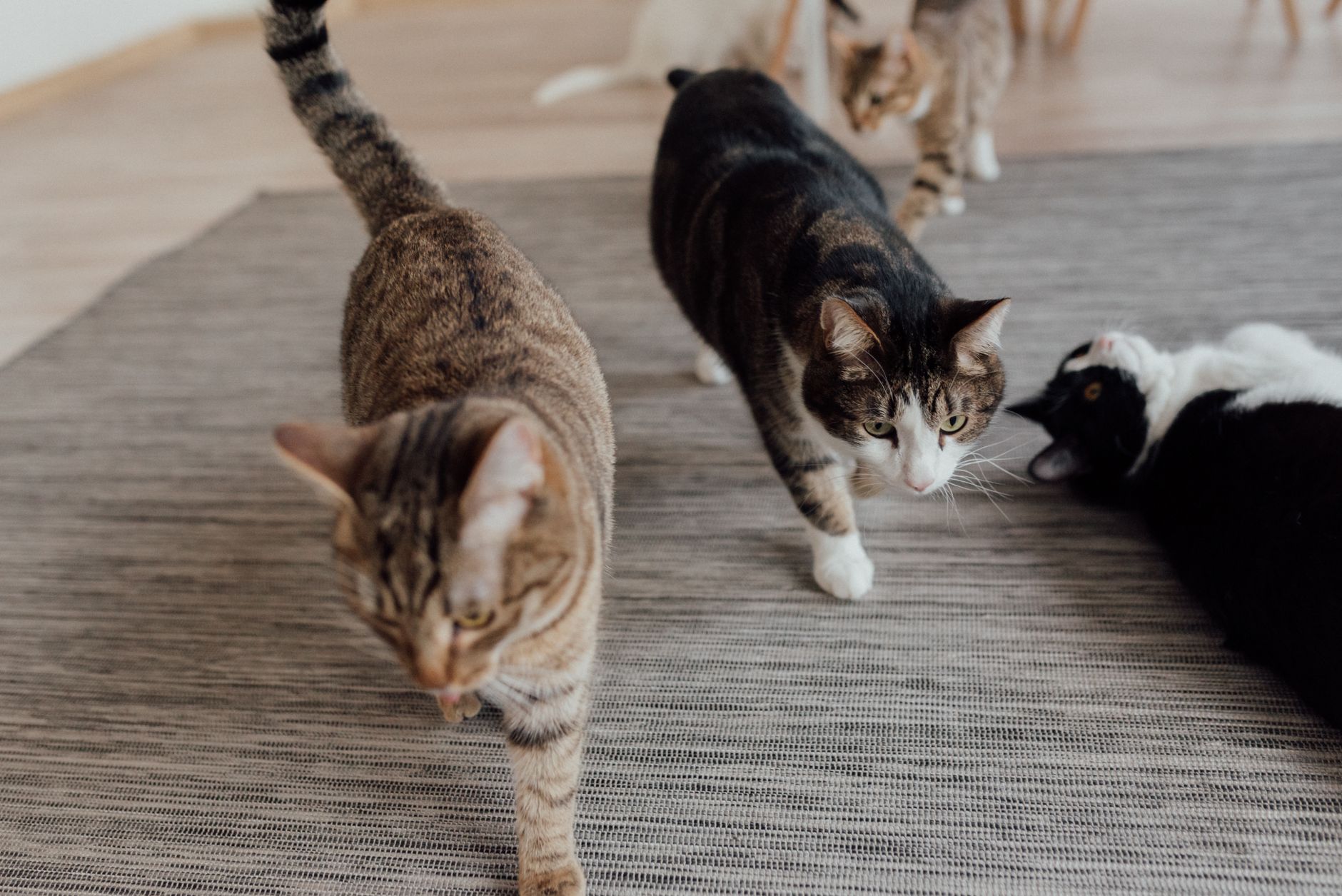
In a multi-cat home, it is common for a confident or faster eater to finish their own bowl and then move on to a housemate’s, which makes portion control very difficult to manage by simply putting bowls down. Separating feeding areas, feeding cats at different times, or using feeders with microchip or timed access can help make sure each cat is actually eating their own portion rather than the most assertive cat eating for two.
Treats as a percentage of daily intake
Treats add calories on top of a cat’s main meals, and it is easy to underestimate how much they add up to over a week. A general rule used by vets is that treats should make up a small proportion of total daily calories, with the great majority coming from a complete, balanced main diet. If you feed treats regularly, it is worth mentally (or literally) subtracting them from the day’s main food allowance rather than treating them as free extras.
When to involve your vet
Speak to your vet if you notice unexplained weight gain or loss, if your cat’s appetite changes suddenly, before starting any weight loss plan, or if you are simply unsure how much to feed a cat with a specific health condition. None of the guidance here is a substitute for advice tailored to your individual cat.
Frequently Asked Questions
Should I follow the feeding guide on the packet exactly?
Use it as a starting point rather than a fixed rule. Your cat’s actual needs depend on weight, age, neuter status and activity, so check body condition regularly and adjust the amount if needed, ideally with your vet’s input.
How do I know if my cat is a healthy weight?
Body condition scoring is more useful than the scales alone. You should be able to feel the ribs easily, see a waist from above, and see a slight belly tuck from the side. Ask your vet to show you if you are unsure.
Is free-feeding bad for cats?
Free-feeding, leaving food out all day, makes it very easy for a cat to overeat and hard for you to notice gradual weight gain. Scheduled, measured meals give much better control over what your cat actually eats.
Can I put my cat on a diet myself?
No, not without your vet. Cutting food too sharply or too quickly can cause a serious condition called hepatic lipidosis in cats. Always get a vet-supervised plan before starting any weight loss diet.
Do neutered cats need less food?
Generally yes. Neutering tends to lower a cat’s metabolic rate while sometimes increasing appetite, so neutered cats often need fewer calories than an unneutered cat of the same size to avoid gradual weight gain.
How do I stop one cat eating another cat’s food?
Separate feeding areas or feeding times help, and in persistent cases a feeder with individual or timed access can make sure each cat only reaches their own portion.