Quick Summary
- Measure first, shop second: take a chest (girth) and neck measurement before buying any harness
- The fit check: you should be able to slide two fingers flat under every strap, no more, no less
- Type matters: front-clip and dual-clip harnesses help with pulling; back-clip alone can encourage it
- Watch the armpits and throat: these are the most common chafing points on a badly fitted harness
- Recheck often: puppies and dogs who gain or lose weight need the fit checked every few weeks
Search “best dog harness UK” and you will get fifty near-identical listicles ranking the same ten products. None of them will tell you the one thing that actually matters: a harness only works if it fits your dog. The wrong size on the right product will chafe, slip, or let a determined dog back out of it entirely. The right size on a budget harness will do its job for years.
This guide skips the product rankings and focuses on what you can control: how to measure your dog properly, which harness style suits their shape, how to check the fit once it is on, and the mistakes that cause the most problems in practice.
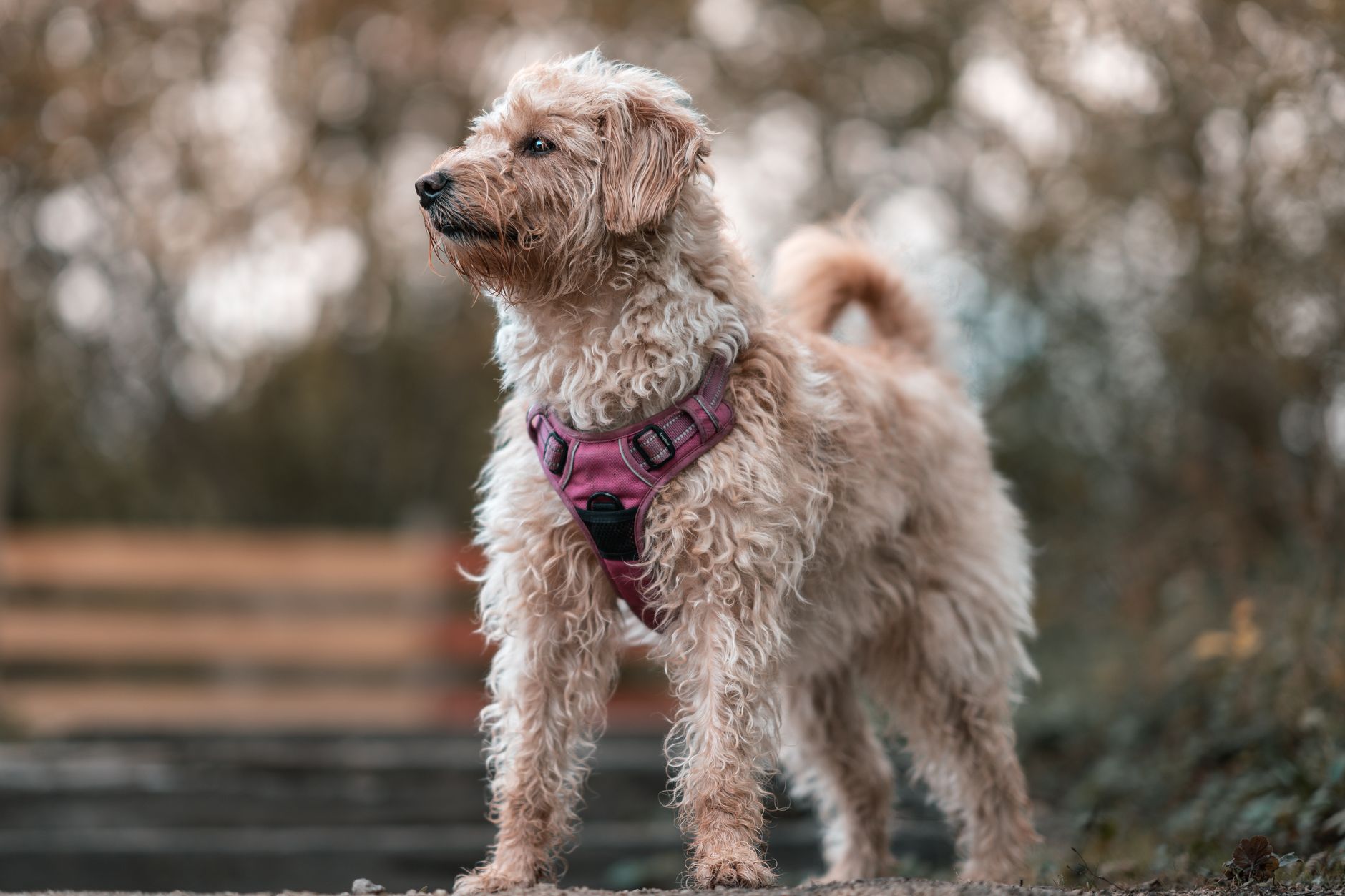
How to Measure Your Dog for a Harness
Every harness brand sizes slightly differently, so always check the specific size chart on the product you are buying. But the measurements themselves are the same across the board. Get these three numbers with a soft tape measure before you shop:
1. Chest girth
Measure around the widest part of your dog’s ribcage, just behind the front legs. This is the single most important number for harness sizing, because the chest strap takes most of the load when a dog pulls or is walking normally.
2. Neck circumference
Measure around the base of the neck, where a collar would normally sit. Y-front and step-in harnesses use this measurement to size the neck opening, even though the dog is not wearing a collar underneath.
3. Back length
For harnesses with a back strap running from the shoulders to the base of the ribcage (common on no-pull and dual-clip designs), measure from the base of the neck to just before the tail. This matters more for long-backed breeds, covered below.
Write all three numbers down before you shop. A dog can sit between two sizes on one brand’s chart and comfortably fit the smaller size on another. When in doubt, most manufacturers and welfare groups suggest sizing up slightly and adjusting the straps down, rather than sizing down and hoping the dog does not grow into it.
Harness Types Explained
Harness marketing uses type names loosely, so here is what they actually mean and who they suit.
| Type | How it works | Best for |
|---|---|---|
| Y-front | Two straps form a Y shape across the chest, leaving the shoulders free to move | Brachycephalic breeds, dogs with restricted shoulder movement, everyday walking |
| Step-in | Dog steps into two leg holes, harness clips closed on the back | Dogs who dislike anything going over their head, small and toy breeds |
| Front-clip | Lead attaches to a ring on the chest, which turns the dog slightly when they pull | Dogs who pull, as a training aid alongside loose-lead work |
| Back-clip | Lead attaches to a ring between the shoulder blades | Dogs who already walk well on a lead, or as a second attachment point on a dual-clip design |
| No-pull / dual-clip | Combines a front chest ring with a back ring, sometimes with a martingale-style tightening loop | Strong pullers, used alongside training rather than instead of it |
A back-clip-only harness on a committed puller can make matters worse, because pulling into a back-mounted ring is a stable, comfortable position for the dog to lean into. If your dog pulls, a front-clip or dual-clip design paired with proper lead training will get better results. For the training side of this, see our guide on how to stop a dog pulling on the lead.
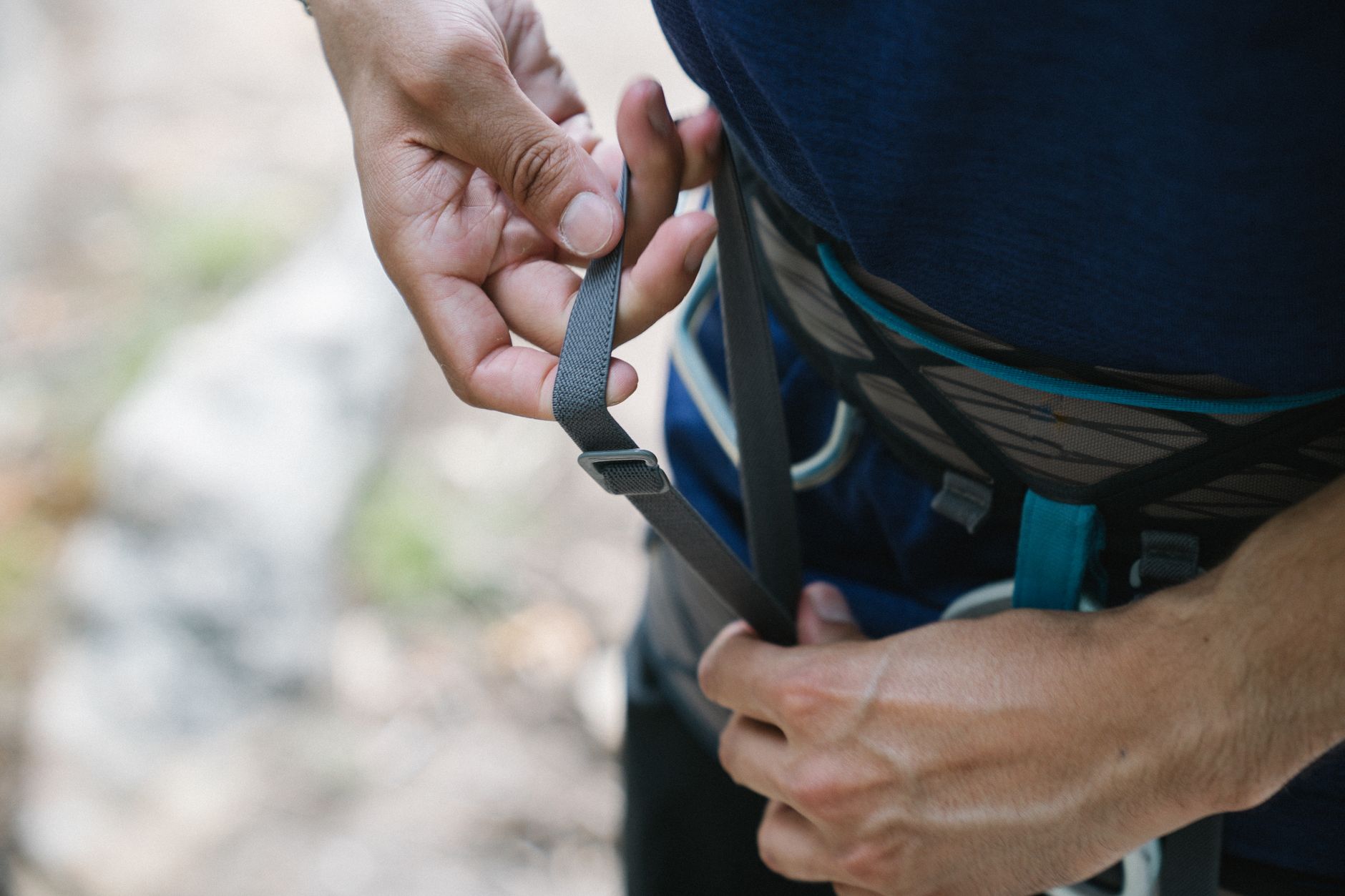
The Fit Checks Every Owner Should Do
The two-finger rule
With the harness fastened, you should be able to slide two fingers flat underneath any strap without forcing them in. If you cannot get one finger under a strap, it is too tight. If you can fit a whole hand in, it is too loose and your dog may be able to back out of it, especially if startled.
Chafing points
Check the armpits, the front of the chest, and the throat area after the first few walks in a new harness. These are the spots where rubbing shows up first, usually as flattened fur, redness, or a bald patch. A harness that chafes is either the wrong size or the wrong shape for your dog, even if the measurements looked right on paper.
The movement test
Watch your dog walk, trot, and turn in the harness. Their front legs should move freely with no strap crossing the point of the shoulder. If your dog seems to be shortening their stride or hopping oddly, the harness is likely restricting shoulder movement and needs adjusting or replacing.
Sizing by Breed Shape
Standard size charts assume a fairly average body shape. Several common builds need extra attention:
- Deep-chested, narrow-waisted breeds (greyhounds, whippets, lurchers): the gap between chest girth and waist can be large, so look for harnesses with an adjustable belly strap or a design specifically cut for sighthounds, otherwise the harness rides forward.
- Broad, barrel-chested and brachycephalic breeds (bulldogs, pugs, boxers): a Y-front design that avoids pressure on the throat is generally preferred over collars for these breeds, since restricted airways are already a concern. Always speak to your vet about exercise and equipment if your dog has a diagnosed breathing condition.
- Long-backed breeds (dachshunds, corgis): pay close attention to the back-length measurement and avoid designs that pull the back strap tight, which can affect posture over a long walk.
- Puppies and growing dogs: re-measure every few weeks. A harness that fit well two months ago can be dangerously tight on a fast-growing puppy.
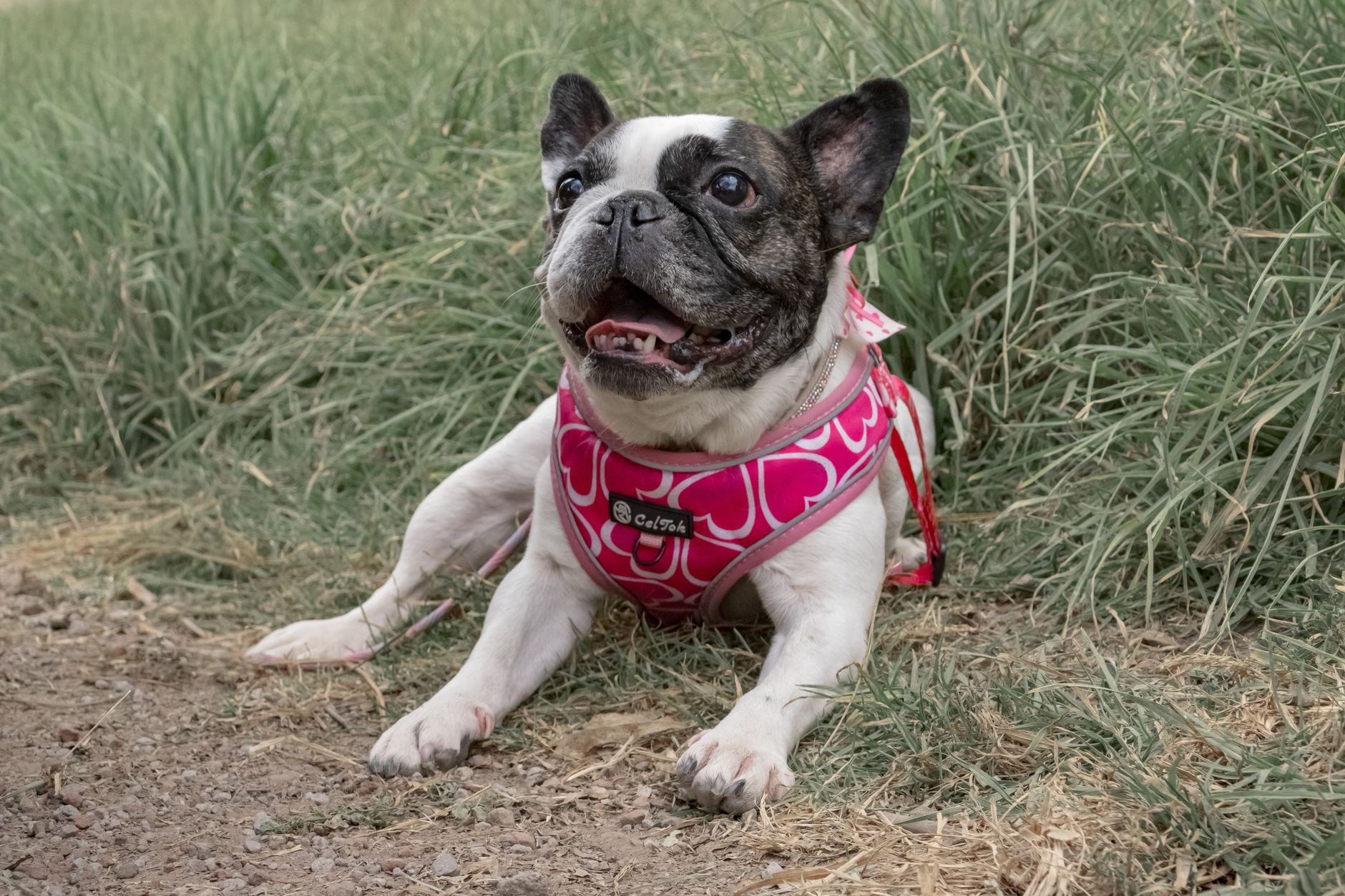
When a Harness Beats a Collar, and When It Doesn’t
A harness spreads pressure across the chest rather than the neck, which is why it is generally the better choice for daily walking, for brachycephalic breeds, and for dogs who pull. The RSPCA’s walking advice also stresses keeping dogs secure and under control in public, which a well-fitted harness supports.
That does not mean the collar becomes redundant. Under the Control of Dogs Order 1992, a dog in a public place must wear a collar with the owner’s name and address on it, regardless of whether they are also wearing a harness. Microchipping is a separate legal requirement on top of this: see gov.uk’s guidance on microchipping your dog. Our guide to UK microchipping and ID tag law covers this in full. In practice, most UK dogs wear both: a collar with a tag for identification, and a harness for control and comfort on the lead.
Common Fitting Mistakes
- Buying by breed alone, not measurements. Two dogs of the same breed can differ by several centimetres in chest girth.
- Ignoring the growth curve. A harness bought for a young puppy rarely still fits by six months old.
- Choosing back-clip only for a puller. As covered above, this can reinforce pulling rather than reduce it.
- Leaving the harness on all day. Even a well-fitted harness should come off indoors to let fur and skin recover, and to let you check underneath for wear or irritation.
- Not adjusting after a wash. Webbing can shrink slightly, so recheck the fit after the harness has been cleaned.
Care and Washing
Most fabric and mesh harnesses can be hand washed in cool water with a mild, unperfumed soap. Rinse thoroughly, as soap residue can irritate skin, and air dry away from direct heat, since tumble drying can warp plastic clips and shrink webbing. Check stitching and buckles for wear every few months, particularly at the points that take the most strain, and replace the harness if webbing looks frayed or a buckle no longer clicks securely shut. For everything else your dog needs day to day, our dog owner essentials checklist is a useful next stop.
Frequently Asked Questions
How do I know if a harness is too small?
You will not be able to fit two fingers flat under the straps, the fabric will pinch or bunch at the armpits, and your dog may shorten their stride or resist putting a leg through. If any of these happen, size up or try a different design.
Can I use a harness on a puppy?
Yes, as long as it is sized correctly and rechecked regularly as they grow. A step-in or Y-front design is often easiest for puppies who are not yet used to having things put over their head.
Is a front-clip harness cruel or uncomfortable?
No. A front-clip ring simply changes the direction of pull so the dog turns slightly rather than being restricted. It works with the dog’s own movement rather than against it, unlike aversive equipment.
Should I remove the collar if my dog wears a harness?
No. UK law requires a collar with an ID tag in public places even if your dog also wears a harness. Keep both on for walks.
How often should I replace a dog harness?
There is no fixed schedule. Check stitching, webbing and buckles every few months and replace it as soon as you see fraying, cracking plastic, or a buckle that does not click firmly shut.
My dog still slips out of a correctly measured harness. What now?
Some dogs, particularly narrow-chested breeds, can back out of a harness that is technically the right size. Look for a design with a girth strap that sits further back, or one specifically built for escape-prone shapes, and always keep the collar and ID tag on as a backup.