Quick Summary — The 10 Essentials
- 1. Collar and ID tag (legally required)
- 2. Microchipping (legally required)
- 3. Well-fitting harness and a quality lead
- 4. Stainless steel food and water bowls
- 5. A comfortable, washable dog bed
- 6. A grooming brush suited to the coat
- 7. Biodegradable poo bags and a dispenser
- 8. Interactive puzzle toys and chews
- 9. A crate or den space
- 10. High-value training treats
Bringing a new dog home is exciting, and it is easy to walk into a pet shop and buy one of everything. Some of what is on the shelves genuinely matters. Some of it is nice to have. And two items on this list are not optional at all, they are UK law. This guide goes through all ten essentials properly: what each one is for, how to choose well, what to avoid, and roughly where your money needs to go first.
What UK Law Actually Requires
Before the shopping list, the legal bit. Every dog in the UK must be microchipped by 8 weeks old, and every dog must wear a collar with an ID tag showing the owner’s name and address whenever they are in a public place, under the Control of Dogs Order 1992. These are two separate requirements, confirmed by gov.uk, and both apply even though a microchip can feel like the modern replacement for a collar tag. It is not.
Everything else on this list, from the bed to the puzzle toys, is about welfare and quality of life rather than the law. We go into the legal requirements in much more depth, including penalties and what to do when you move house, in our dedicated guide to UK dog law on microchipping and ID tags.

The 10 Essentials, One by One
1. Collar and ID Tag (Legally Required)
This is not optional. The collar needs to fit two fingers snugly under it, not so loose it can slip over the head, and the tag needs to show your name and address at minimum. Many owners add a phone number and deliberately leave the dog’s name off, since a tag with the dog’s name on it lets a stranger call them over.
What to avoid: choke or slip collars for everyday wear, and tags engraved so lightly they wear unreadable within a few months. Budget-wise, this is one of the cheapest items on the list, and there is little reason to spend heavily here.
2. Microchipping (Legally Required)
A microchip is a rice-grain-sized transponder inserted under the skin by a vet or trained professional, carrying a unique number linked to your contact details on a database. It has to be done, but just as importantly, the database record has to be kept current. An out-of-date chip is close to useless if your dog goes missing.
What to avoid: registering once and forgetting about it. Update your details the moment you move house or your phone number changes. Full detail on the legal side, including penalties, is in our microchipping and ID tag law guide.
3. Harness and Lead
A well-fitted harness spreads pressure across the chest and shoulders rather than the throat, which matters for any dog but especially for breeds prone to tracheal issues or for puppies still growing into their bodies. A front-clip harness gives you more control over a dog that pulls; a back-clip is fine for a dog that already walks nicely.
What to avoid: buying by weight alone without checking chest girth, and leaving a harness loose enough for a dog to back out of. We cover fitting properly, including how to measure and the mistakes that let dogs slip free, in our dog harness fitting guide. Expect the lead to be one of the cheaper buys on this list and the harness to sit a little higher, particularly if you go for a padded or multi-point design.
4. Food and Water Bowls
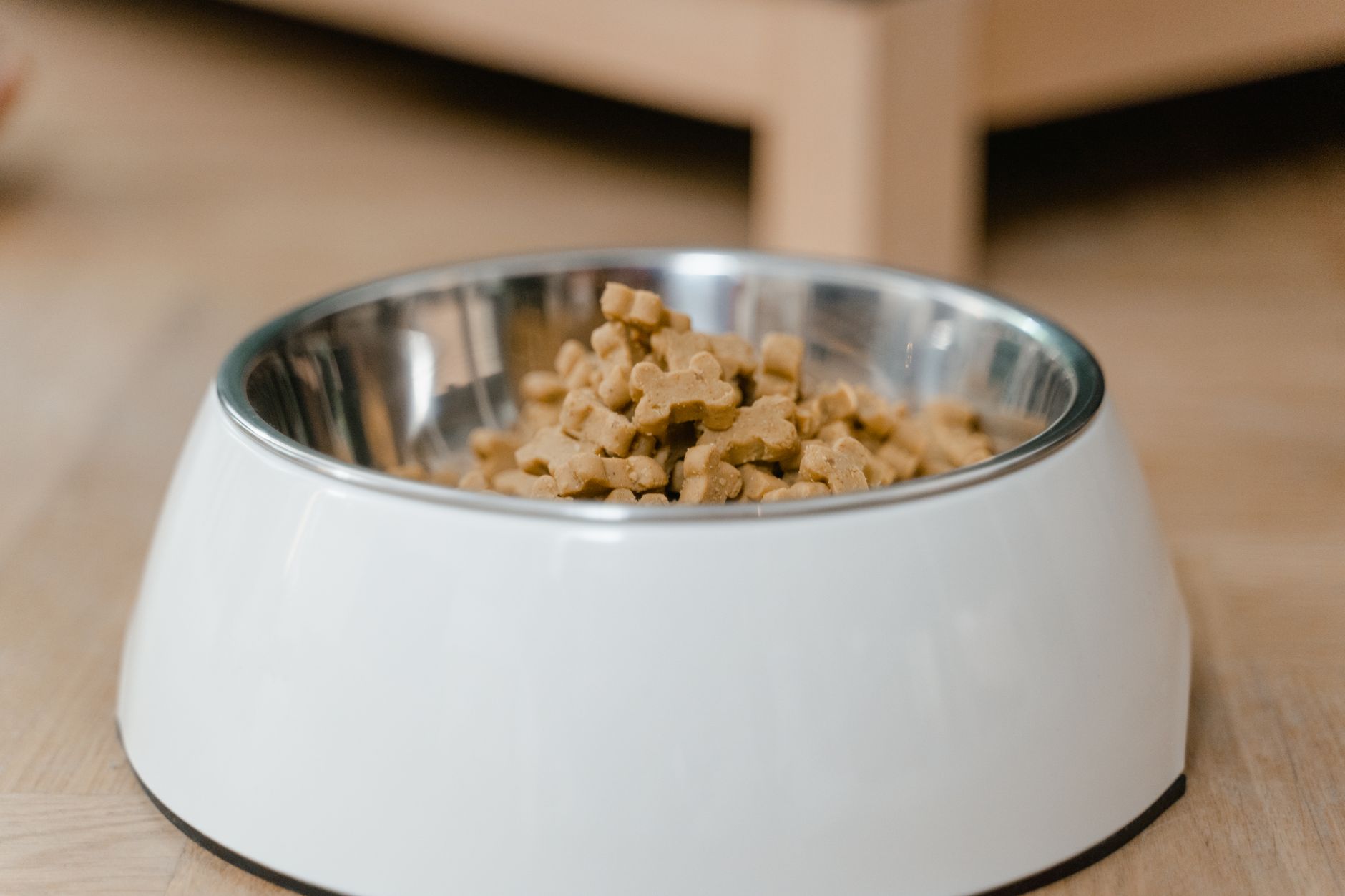
Stainless steel is the practical default: it does not hold bacteria the way plastic can, does not stain, and survives a dishwasher. Ceramic is a reasonable alternative if you want something heavier that will not slide around the kitchen floor. For a deep-chested breed, ask your vet whether a raised bowl is worth considering.
What to avoid: cheap plastic bowls that scratch easily, since the grooves can harbour bacteria and some dogs develop chin irritation from prolonged plastic contact. This is a low-cost item and not somewhere you need to spend much.
5. A Comfortable, Washable Bed
Look for a removable, machine-washable cover, since dog beds get dirty fast, and a filling that holds its shape rather than flattening within weeks. Size the bed so your dog can fully stretch out, not just curl up.
What to avoid: beds with no washable cover, and buying a puppy-sized bed you will need to replace within months as they grow. This is one item worth spending a bit more on if your budget allows, since a bed that holds up well saves you buying twice.
6. A Grooming Brush Suited to the Coat
The right brush depends entirely on coat type: a slicker brush works well for most medium and long coats, a bristle brush suits short, smooth coats, and double-coated breeds benefit from an undercoat rake, particularly during seasonal moults. Grooming little and often prevents the mats and tangles that turn into a much bigger, more stressful job later.
What to avoid: pulling a slicker brush hard through matted fur, which hurts and can cause skin damage; work mats out gently or ask a groomer. Our step-by-step home grooming guide covers the full routine and which tools suit which coats. A decent brush is inexpensive and lasts years if you look after it.
7. Biodegradable Poo Bags and a Dispenser
Not picking up after your dog in a public place is an offence in most UK areas under local Public Spaces Protection Orders, so this is as close to essential as the non-legal items on this list get. A lead-attached dispenser means you are never caught without one.
What to avoid: bags so thin they tear on the first use. This is one of the cheapest recurring costs of dog ownership, and buying in bulk keeps it that way.
8. Interactive Puzzle Toys and Chews
Mental stimulation matters as much as physical exercise for most dogs, and puzzle feeders, snuffle mats and appropriate chews all help burn energy without a walk. Match the toy to your dog’s size and jaw strength, since a toy built for a small breed will not survive a determined chewer.
What to avoid: toys with small parts that can be chewed off and swallowed, and rawhide of unknown origin. For more ideas on keeping a bored dog occupied at home, see our guide to toys for bored dogs. Prices vary widely here, from a few inexpensive chews to a more considered outlay on a durable puzzle feeder.
9. A Crate or Den Space
A crate, used properly, gives a dog a safe space of their own rather than acting as punishment, and it is invaluable for house-training a puppy, for car travel, and for settling a nervous rescue dog. Size it so your dog can stand, turn around and lie flat, with a little extra room for an adult dog’s eventual size if you are buying for a growing puppy.
What to avoid: using the crate as a punishment tool, which undoes its usefulness as a safe space, and leaving a dog crated for long stretches without breaks. This tends to be one of the larger one-off purchases on the list, particularly for bigger breeds.
10. High-Value Training Treats
Small, soft, quick-to-eat treats work best for training, since you want your dog focused on the next repetition rather than chewing for thirty seconds. Keep an eye on overall calorie intake so treats do not tip your dog into being overweight, and reduce meal portions slightly on heavy training days.
What to avoid: treats with a long ingredients list of fillers, and treats too large to give quickly and repeatedly. This is a small, ongoing cost rather than a one-off spend.
Legally Required vs Nice to Have
| Item | Legal status |
|---|---|
| Collar and ID tag | Legally required in public places (Control of Dogs Order 1992) |
| Microchipping | Legally required by 8 weeks old (Microchipping of Dogs (England) Regulations 2015, UK-wide in practice) |
| Harness and lead | Not legally required, but a lead is often needed to meet control expectations in public spaces |
| Bowls, bed, brush, toys, crate, treats | Not legally required; welfare and quality-of-life items |
Budgeting Sensibly
We are not going to invent prices, because they change constantly and vary by brand, size and retailer. What is worth knowing is the shape of the spend: the collar, tag, poo bags and treats are small, recurring costs; the bed and crate tend to be the largest one-off purchases, especially for bigger breeds; and the harness sits somewhere in the middle depending on the design. Microchipping is usually a one-off vet or council fee, and some charities run low-cost or free microchipping events, which is worth asking your vet or local council about directly.
According to the PDSA Animal Wellbeing Report, ongoing costs like food, insurance and routine vet care are a bigger long-term commitment than the initial kit, so it is worth budgeting for the whole first year, not just the shopping trip.
Frequently Asked Questions
Which of these items are actually required by law?
Only two: microchipping by 8 weeks old, and a collar with an ID tag showing your name and address whenever your dog is in a public place. Everything else on this list is a welfare or convenience item, not a legal requirement.
Do I need a harness if my dog already has a collar?
Legally, no, the collar and tag satisfy the law on their own. Practically, many owners prefer to walk their dog on a harness and keep the collar purely for the ID tag, since it spreads pressure more evenly and gives better control.
What is the single most important item to buy first?
Sort the legal requirements first: get your dog microchipped and fit a collar with an ID tag before they ever go outside. Everything else on the list can follow over the first week or two.
Can I put my dog’s name on their ID tag?
There is no legal rule against it, but many owners leave it off deliberately so a stranger cannot call the dog over by name. Name and address, plus an optional phone number, covers the legal requirement.
Do puppies need all ten items immediately?
The two legal items and a bed, bowls and a crate for house-training are worth having from day one. Toys, a full grooming kit and training treats can follow within the first week as you settle in.