Quick Summary
- Brush before every bath, dry fur mats far less than wet fur
- Match your brush to the coat type, a slicker brush is not right for every dog
- Bathe most dogs every 4 to 8 weeks with lukewarm water and a dog-specific shampoo
- Never cut a mat out with scissors, the skin sits closer to the surface than you think
- Two small nail snips beat one large cut, and a nail grinder gives you more control
- If you cannot manage a mat, a skin problem or a nervous dog safely, book a professional groomer or vet
Professional grooming in the UK is not cheap, and for a lot of dogs it is not strictly necessary either. With the right kit and a bit of patience, most owners can handle brushing, bathing, nail trims and basic ear and dental care at home. This guide walks through each step, including how brushing technique changes depending on your dog’s coat type, because a technique that works beautifully on a Labrador will do very little for a Poodle.
As with any home care routine, grooming is not a substitute for veterinary attention. If you find a lump, a sore, a bald patch or anything that looks infected, speak to your vet rather than treating it yourself.
The Grooming Kit You Actually Need
You do not need every tool on the shelf. Most dogs are well served by four or five items.
| Tool | What it is for |
|---|---|
| Slicker brush | Fine wire bristles that lift loose fur and light tangles, good for double coats and curly coats |
| Bristle brush | Smooths and adds shine on short, smooth coats |
| Undercoat rake | Reaches through a thick double coat to remove the loose undercoat beneath the top layer |
| Dematting comb or wide-tooth comb | Works through tangles gently, essential for long, silky or curly coats |
| Dog-specific shampoo | Correct pH for dog skin, never use human shampoo |
| Ear cleaning solution | Vet-approved liquid for routine ear hygiene |
| Nail clippers or a nail grinder | Guillotine or scissor clippers for most dogs, a grinder for extra control |
| Absorbent towels | Microfibre towels cut drying time significantly |
| Treats | Every session should end on a positive note |
Brushing Technique by Coat Type
Brushing is the single most important home grooming task, and the technique that works depends entirely on what sort of coat your dog has. Always brush before a bath, never after, since wet fur tangles and mats far more easily than dry fur.
Smooth Coats
Breeds such as Labradors, Beagles, Boxers and Staffordshire Bull Terriers have short, close-lying fur with very little undercoat. A rubber curry brush or a soft bristle brush used in short strokes, following the direction of hair growth, is usually enough once or twice a week. This lifts loose hair and dead skin and leaves the coat glossy.
Double Coats
German Shepherds, Huskies, Golden Retrievers and Border Collies carry a soft, dense undercoat beneath a coarser top coat. Use an undercoat rake first to pull loose fur from underneath, then follow with a slicker brush to finish the top coat. Double coats shed heavily twice a year, and brushing two or three times a week during those periods prevents a huge amount of loose hair around the house.
Wire Coats
Terriers such as the Border Terrier, Wire Fox Terrier and Schnauzer have a harsh, wiry top coat over a softer undercoat. A slicker brush followed by a metal comb works well for routine maintenance, but wire coats also benefit from hand-stripping a few times a year, which is usually a job for a professional groomer since it uses a specific technique to pull out dead hair rather than cutting it.
Curly Coats
Poodles, Cockapoos, Labradoodles and Bichon Frises have dense, curly coats that trap loose hair rather than shedding it, which makes them prone to matting if left too long between brushes. Use a slicker brush in thin sections, working from the skin outward, then follow with a wide-tooth comb to check every section has been properly separated. Curly coats generally need brushing every one to two days.
Long Silky Coats
Yorkshire Terriers, Afghan Hounds, Shih Tzus and Cocker Spaniels have long, fine fur that tangles easily, particularly behind the ears, under the collar and around the legs. Use a wide-tooth comb or a pin brush and work in small sections, holding the hair near the skin so you are not pulling on it directly. Daily brushing is usually needed to keep a long silky coat free of knots.
Matting: Prevention and Safe De-matting
Mats form when loose fur tangles into a tight knot close to the skin. Left alone, a mat pulls on the skin constantly, can trap moisture and dirt against it, and eventually restricts movement. Regular brushing in the sections above is the best prevention.
If you do find a mat, work it apart gently with your fingers first, then use a dematting comb from the outer edge of the mat inward, holding the base of the hair between your fingers so you are not tugging directly on the skin. A little detangling spray can help loosen it.
Never cut a mat out with scissors. Dog skin is thin and mobile, and it tents up into a mat as it tightens, which means the skin is often much closer to your scissor blades than it looks. Vets see serious cuts every year from owners trying to cut out mats at home. If a mat is tight, close to the skin, or covers a large area, the safest option is clippers used by a professional groomer, or a vet if the skin underneath looks sore or broken.
Bathing: Frequency and Water Temperature
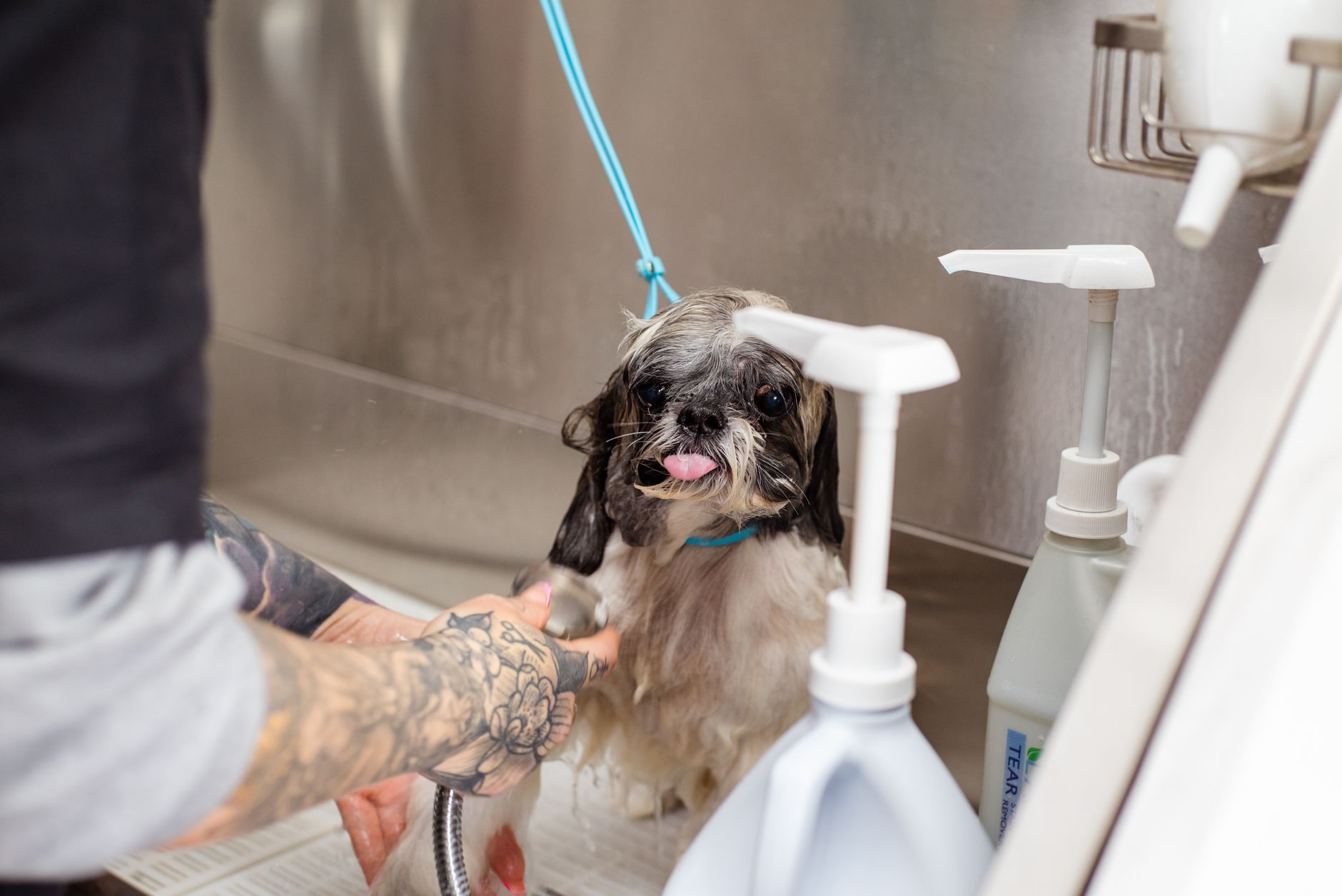
Most dogs need bathing roughly every four to eight weeks, though this varies with coat type, activity level and any skin conditions your vet has flagged. Bathing too often can strip the natural oils that keep skin and coat healthy, so more is not automatically better.
Always use lukewarm water, similar to what feels comfortable on the inside of your wrist. Water that is too hot can scald sensitive skin, and cold water is simply unpleasant and makes the whole experience more stressful than it needs to be. Wet the coat thoroughly down to the skin before applying a dog-specific shampoo, working it in and rinsing until the water runs completely clear, since leftover shampoo residue can irritate the skin.
Keep water and shampoo away from the eyes and ears. A cotton wool ball placed loosely in the ear opening before bathing helps stop water running down the ear canal.
Drying Your Dog Properly
Squeeze excess water out of the coat with your hands before you reach for a towel, then towel dry thoroughly, paying particular attention to the belly, armpits and any skin folds. Damp skin left too long, especially on double-coated or curly-coated breeds, can lead to a damp, warm environment where bacteria and yeast thrive.
If you use a hairdryer, use the lowest heat setting, keep it moving constantly, and hold it well away from the skin. Many dogs find dryers noisy and unsettling at first, so introduce one gradually with treats rather than switching it straight on at full power next to their head.
Nail Trimming and Finding the Quick
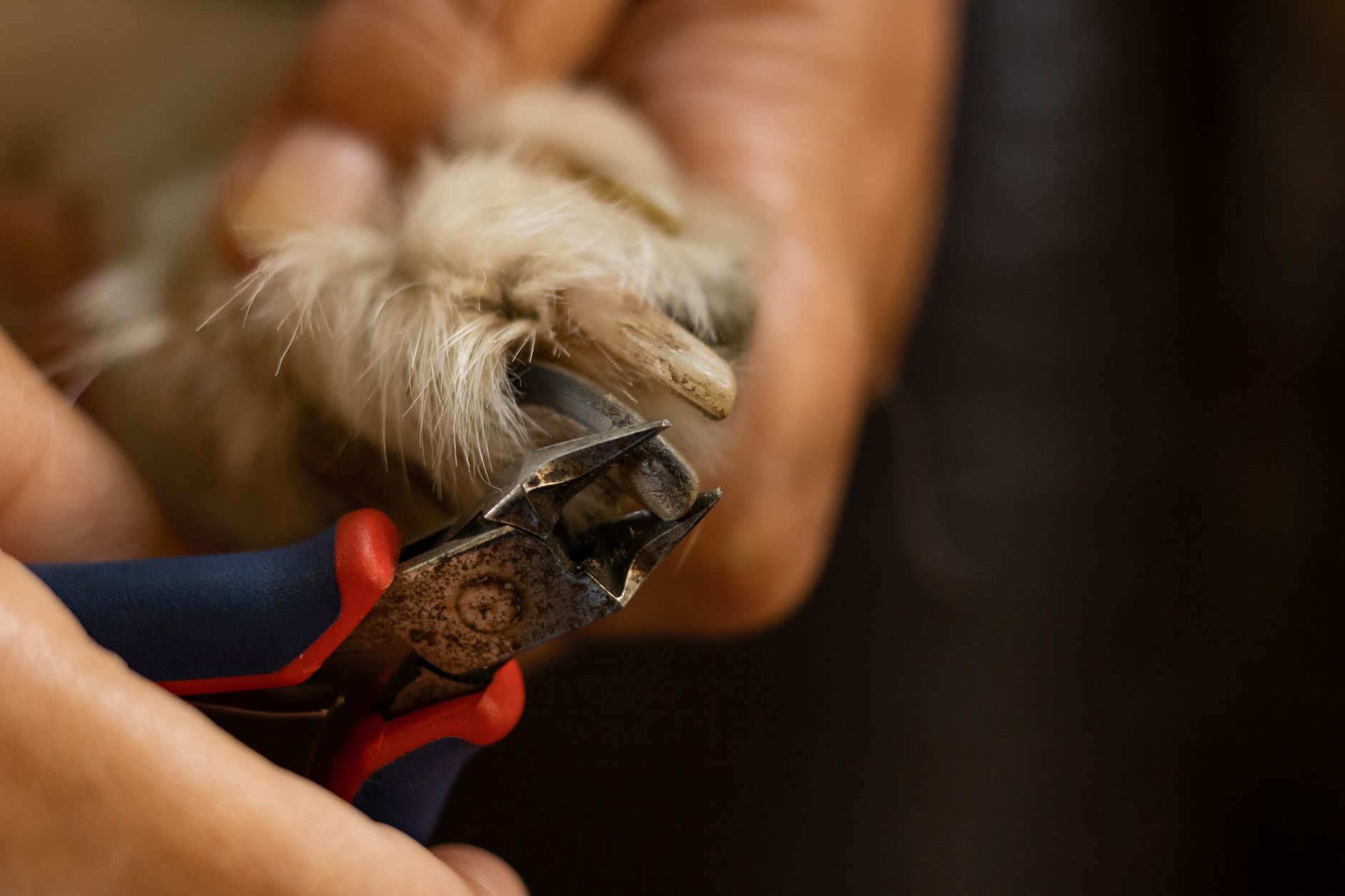
Overgrown nails can alter how a dog stands and walks, so regular trimming matters even for dogs that wear nails down naturally on hard ground. Trim little and often rather than taking off a large amount in one go.
On dogs with pale nails, you can usually see the pink quick, which is the blood vessel and nerve running through the centre of the nail, through the translucent nail wall. Cut just in front of it. On dark nails where the quick is not visible, take off very thin slices at a time and stop as soon as you see a small grey or pink dot appear in the centre of the cut surface, which signals you are close.
If you do catch the quick, it will bleed and your dog will likely yelp. Styptic powder pressed onto the tip stops the bleeding quickly. If you are not confident trimming nails, a groomer or vet nurse can do it quickly and safely, and can also show you the technique on your own dog.
Ear and Dental Basics
Check ears weekly for redness, odour or excess wax, and clean roughly once a month unless your vet has advised otherwise. Apply a few drops of a vet-approved ear cleaning solution into the canal, massage gently at the base of the ear for around 20 to 30 seconds, then let your dog shake and wipe away what comes to the surface with cotton wool. Never push cotton buds down into the ear canal.
For teeth, aim to brush a few times a week with a dog-specific toothpaste and a soft brush or finger brush. Human toothpaste is not suitable for dogs. Dental chews and appropriate chew toys can help between brushes, but they are a supplement to brushing, not a replacement for it.
When to Stop and Call a Professional Groomer
Home grooming covers most routine needs, but there are times when it is safer, kinder and more practical to book a professional groomer:
- Mats that are tight, extensive, or close to the skin
- Breeds that need hand-stripping or specialist clipping, such as many wire-coated terriers and show-trimmed Poodles
- A dog that becomes genuinely distressed or aggressive during grooming
- Any skin condition, sore, lump or wound you have noticed, which should be checked by a vet first
- Full coat clips that need even, consistent results across the whole body
According to the RSPCA, the dog grooming industry in the UK is not currently regulated, so it is worth meeting a groomer and asking about their experience and how they handle dogs before booking, particularly for a nervous or reactive dog.
For everything else, brushes, bath supplies, nail tools and more, you can browse our grooming range for UK delivery.
Frequently Asked Questions
How often should I groom my dog at home?
It depends on coat type. Smooth coats need brushing once or twice a week, double coats two or three times a week (more during heavy shedding seasons), and curly or long silky coats every one to two days. Bathing is usually needed every four to eight weeks for most dogs.
Can I use human shampoo on my dog?
No. Human shampoo has the wrong pH for a dog’s skin and can cause dryness or irritation. Always use a shampoo formulated specifically for dogs, and speak to your vet if your dog has sensitive skin or an existing skin condition.
Is it ever safe to cut out a mat myself?
Small, loose tangles can usually be worked out with a comb and some patience. Tight mats close to the skin are best left to a professional groomer with clippers, since dog skin tents up inside a mat and is easy to nick with scissors even when you are being careful.
How do I know if I have cut the quick when trimming nails?
You will usually see a small pink or grey dot appear in the centre of the freshly cut nail as you get close, and the nail may feel slightly softer. If you do cut into it, it will bleed and your dog may yelp. Styptic powder applied to the tip will stop the bleeding.
My dog hates being groomed. What should I do?
Build up gradually with very short sessions and plenty of treats, starting with just touching the brush to the coat for a few seconds. If your dog remains distressed, aggressive or shows signs of pain, stop and speak to your vet, since pain or an underlying skin problem can be behind sudden grooming resistance.
If you also share your home with a cat, our companion guide on cat grooming at home covers brushing, matting and shedding for cats specifically, since their coats and temperaments need a different approach. For the rest of your dog’s kit, see our essential dog accessories checklist, and if brushing sessions keep getting interrupted by a dog that will not settle, our guide on enrichment for bored dogs may help burn off some energy first.
Sources: RSPCA, choosing a dog groomer, The Kennel Club, how to groom my dog, PDSA, how often should you groom your pet.